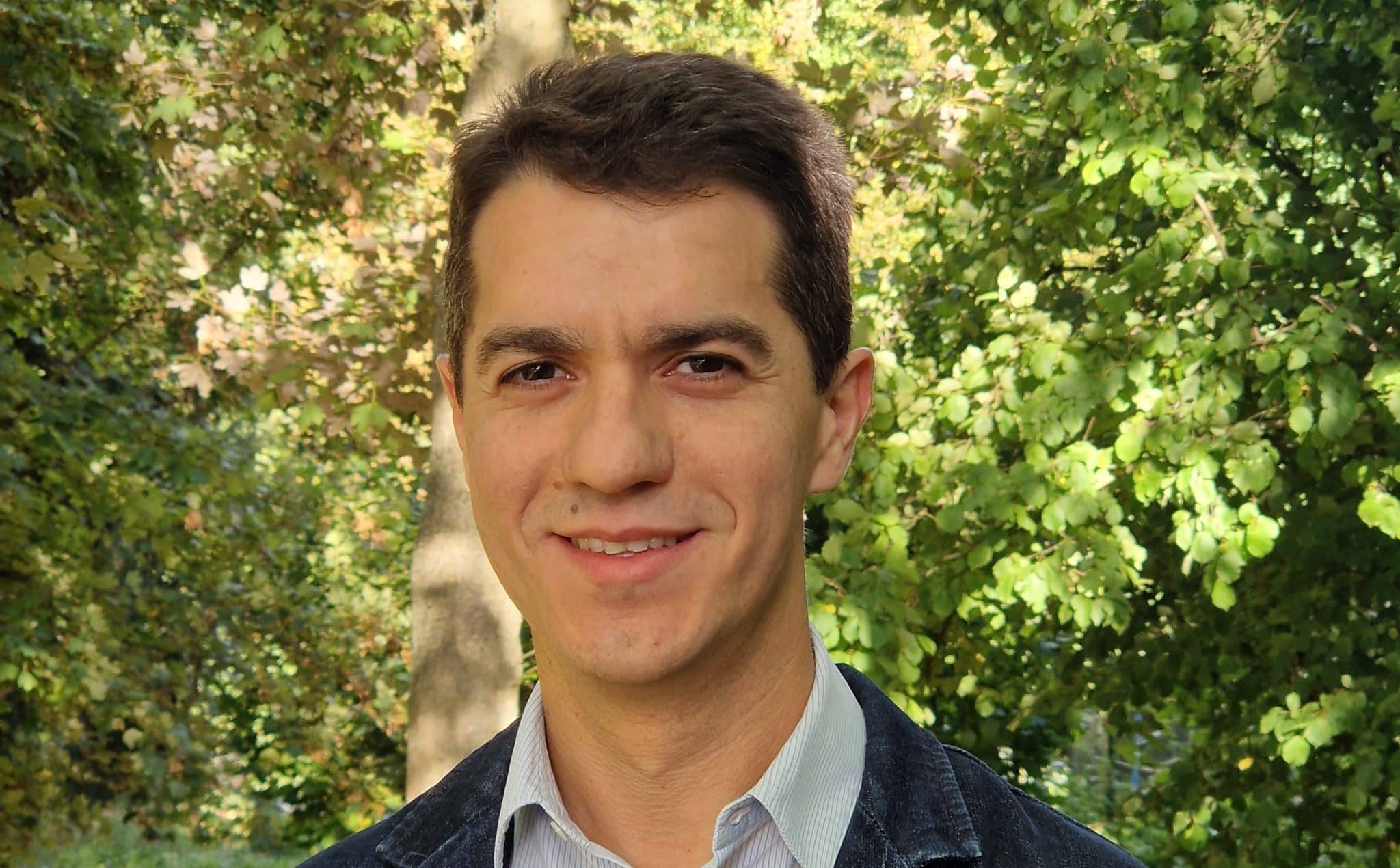

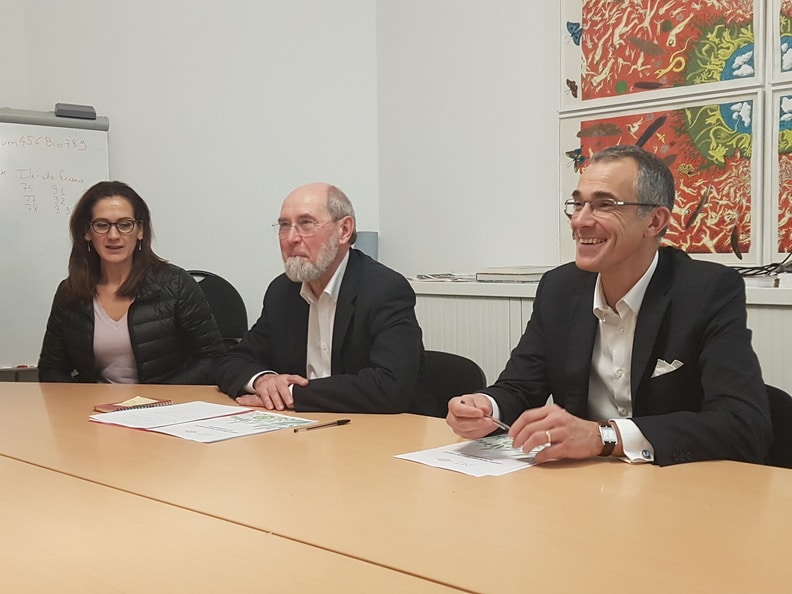
Villeneuve-sous-Dammartin, January 16 – Bernard Chevassus-au-Louis, Chairman of the Humanité et Biodiversité association, and Laurent Mogno, Chairman of ECT, have officially signed a joint charter of commitment to biodiversity. This Charter is the result of a year’s work with a shared objective: to share the challenges of preserving life, to participate in the development of knowledge and to affirm through action positive commitments to biodiversity. For Humanité et Biodiversité, this co-written and co-signed charter represents an opportunity to take action to integrate biodiversity into operational projects. Through this signature, ECT is structuring its capacity and methods of intervention in favor of biodiversity on a territorial scale.
The aim: to improve its expertise in the creation of non-built, differentiated-use developments that are highly conducive to the preservation and development of biodiversity.
To meet these challenges, we have chosen to focus on 3 key areas of commitment:
- Realizing the biodiversity potential of ECT sites
- Training in biodiversity issues
- Contribute to the development of knowledge about biodiversity


Biodiversity Charter: ECT's commitments
PRIORITY AREA 1: REALIZING THE POTENTIAL OF ECT SITES TO PROMOTE BIODIVERSITY-
PRIORITY AREA 2: EDUCATE ON BIODIVERSITY ISSUES AND RAISE AWARENESS OF THE AL OPPORTUNITIES THAT ECT SITES OFFER FOR BIODIVERSITY
AXIS 3: CONTRIBUTE TO THE DEVELOPMENT OF KNOWLEDGE ON BIODIVERSITY
E1 – Integrate biodiversity issues into the company’s strategy and leverage the
development of ECT projects to implement concrete, positive actions for biodiversity, from the prospecting phase through the completion of development projects and their follow-up
E2 – Adopt a regional perspective, combat landscape fragmentation,
land development, and biodiversity loss. ECT sites offer an opportunity to expand habitats conducive to biodiversity and work toward strengthening ecological connectivity.
E3 – Develop a systems-based approach to integrate all components of the environment—
—and the interdependencies between humans and nature during the design,
implementation, and monitoring of projects.
E4 – Inform, train and mobilize employees (both administrative and operational) on biodiversity issues during all stages of development (invasive species, protected species, etc.) and make them aware of the potential and opportunities presented by ECT sites in favor of biodiversity.
E5 – Work with stakeholders (local governments, city halls, local organizations,
residents, associations, etc.) to incorporate biodiversity-related issues into project design. In this regard, it is conceivable to consider developing a charter
with the various stakeholders around a specific project.
E6 – Promote the integration of biodiversity considerations across all sites; communicate as widely as possible about biodiversity issues, particularly by highlighting
, developing flagship initiatives, and raising awareness and informing other site users about the importance of preserving biodiversity.
E7 – As part of scientific research programs related to biodiversity, or for the needs of associations, ECT makes available sites that the company considers to be of interest for the development of knowledge about biodiversity issues.
E8 – With a view to increasing its knowledge of biodiversity, ECT is developing biodiversity partnerships to monitor changes in biodiversity and adapt actions to preserve and protect living organisms.
E9 – To facilitate the dissemination and organization of scientific knowledge related to biodiversity, ECT is committed to collecting data pertaining specifically to biodiversity, regional policies, the circular economy, land-
, and resource conservation. This data may be collected as part of the various projects carried out by ECT and will be made available to public research programs working in the fields mentioned above.
About Humanité et Biodiversité
Humanité et Biodiversité is a non-profit association under the French law of 1901. for nature protection. It is currently chaired by Bernard Chevassus-au-Louis, and Hubert Reeves became its active Honorary Chairman. Humanité et Biodiversité lobbies and influences to raise awareness of the challenges the challenges posed by the erosion of biodiversity, and to implement solutions. Humanité et Biodiversité promotes solutions that reconcile the needs of our societies and the diversity of living organisms, with the conviction that “. Biodiversity everywhere, with everyone and for everyone”. Together with its members, Humanité et Biodiversité has created a network of areas that are favorable to flora and fauna, the Nature Oases.
www.h umanité-biodiversité.fr
About ECT
ECT’s growth is part of a circular economy strategy: reusing land
inert materials from construction sites in the Paris region to work with local authorities
concerted, sustainable development projects.
To structure this dynamic, ECT has developed “Land management” expertise.
to respond to the need for environmental engineering and the requirement to
traceability in the building and civil engineering sector, combined with a “Design and development” division to
offer local communities useful projects based on land reclamation
landscape or urban parks, urban farms, photovoltaic power plants,
golf courses, equestrian centers and sports facilities
Key figures: founded in 1997 ║230 employees ║Fifteen sites in France
operations in the Paris region ║15 million tonnes of excavated material processed / year ║
10,000 trees planted / year
PRESS CONTACT ECT – HOPSCOTCH
Ariane Gateau – 01 58 65 10 72 agateau@hopscotch.fr
Sarah El Adak – 01 41 34 22 88 seladak@hopscotch.fr